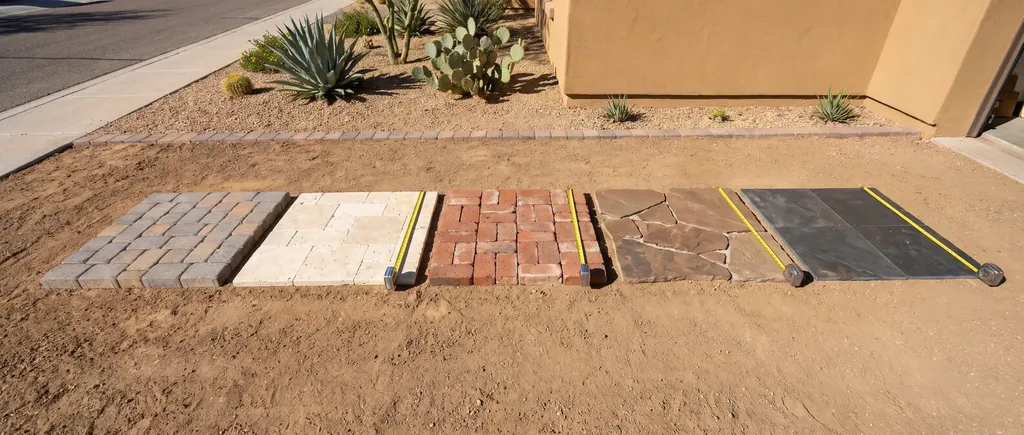
Paver types and materials
Concrete, travertine, brick, flagstone and other natural stone compared on heat, wear, upkeep and where each one belongs.
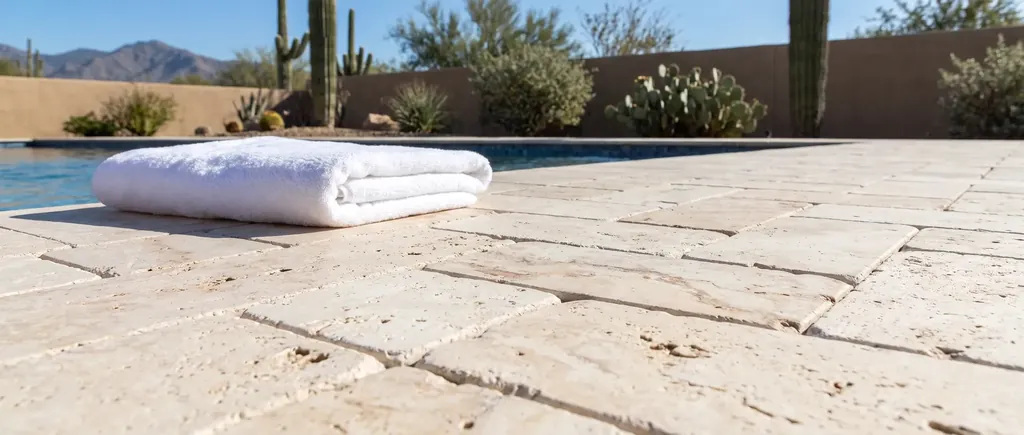
Travertine is the stone people start asking about after one barefoot walk across a dark deck in July. We install travertine patios and pool decks on a compacted base, with coping, borders and cuts finished as carefully as the open field of stone.
Travertine is a natural limestone laid down by mineral springs. That origin gives it two traits that matter here. It comes in pale creams, ivories and soft walnut tones that reflect a lot of sunlight, and its body is full of tiny pores that let it shed heat quickly once the sun moves off it. Put those together and a travertine patio stays noticeably more comfortable underfoot than most paving in a similar color.
The same pores make it grippy when wet, which is why travertine is the stone we are asked about most often for pool decks. A tumbled finish has softened edges and a slightly textured face that holds bare feet well around the water.
None of that helps if the stone is set badly. Travertine pavers are cut stone, not molded units, so thickness can vary a little from piece to piece. On a sand set job we screed the bedding layer with that in mind and check the surface as we go, so you do not end up with lips that catch toes and pool noodles alike. Under the bedding sits the same thing every surface we build sits on: native soil compacted, then crushed aggregate placed and compacted in layers, with caliche dealt with before it can trap water under the patio.
Travertine is not the right answer for every yard. It costs more than most concrete pavers, it can etch if acidic drinks or harsh cleaners sit on it, and the pores in an unfilled tile collect dust in a windy spot. We will tell you that up front, and we will tell you when a light colored concrete paver would do the job just as well.
New decks around an existing pool, or a replacement for a cracked or painted concrete deck. We fit bullnose coping to the pool edge, pitch the deck so splash water runs away from the water line, and work around skimmers, drains and equipment.
Back yard patios and front courtyards in a single size or in a French pattern of mixed rectangles and squares. A border course in a contrasting tone or size gives the edge some weight against gravel or planting.
Where an existing slab is flat, well drained and structurally sound, thinner travertine can be set on it in mortar instead of tearing it out. We check the slab first and tell you honestly if it is not a good candidate.
A layout that sets the starting line, the pattern direction and where cuts will fall, so small slivers end up hidden against walls rather than at the steps or the pool edge.
Removal of the old surface where needed, excavation to depth, compaction of the subgrade, and aggregate base placed in compacted lifts with a fall built in away from the house and pool.
Bullnose coping at the pool, a border course where the design calls for one, and every cut made on a wet saw so the edges stay crisp.
Edge restraint fixed along the open sides, joints filled with sand suited to stone, and a final clean. We talk through sealing with you and leave the choice in your hands.
We measure the area, look at how water leaves it, check access for pallets of stone, and look closely at any slab you are hoping to keep.
We walk you through colors, finishes and sizes, and suggest you see samples wet and dry in your own light before you choose.
You receive a written scope covering removal, base, stone, coping, pattern and edge detail, laid out so you can compare it line by line.
Natural stone varies between batches, so we order the full quantity together and keep enough spare for future repairs.
Removal, excavation, base, bedding, laying, cutting, coping, restraint and joint fill, with daily cleanup so the yard stays usable around the pool.
We walk the finished surface with you, explain how to clean travertine without damaging it, and hand over the spare stone.
We treat travertine as stone, not as a heavy paver. That means allowing for variation in thickness, blending pieces from different crates so color spreads evenly, and checking the surface as we lay rather than only at the end.
We are honest about the material. If your yard gets heavy dust, if the deck will see a lot of spilled wine at parties, or if the budget is tight, we will talk through whether a filled finish, a sealer or a cool toned concrete paver makes more sense.
And we finish the edges properly. Coping that sits level, borders that run true and cuts placed out of sight are what make a travertine deck look built rather than laid.
Tell us about the area and what is there now. We will bring samples, check the levels and give you a straight answer on whether travertine suits it.
It is one of the best. Its pale tones reflect sunlight and its porous body gives off heat quickly, so it stays more comfortable underfoot than dark concrete or clay. Light concrete pavers in cream or sand tones are a good second choice.
It depends on the stone or paver you choose, how much has to be removed first, how deep the base needs to go for your soil, the amount of cutting and coping, and access to the yard. Travertine generally sits above concrete pavers. We give a written estimate after seeing the site.
Both work when done right. Sand over a compacted aggregate base is our default for new patios and pool decks because it flexes with the ground and allows easy repairs. Mortar suits thinner travertine set over a sound existing slab.
The steps are excavation, compaction of the native soil, a compacted aggregate base built in layers, a screeded sand bed, the pavers, edge restraint and joint sand. In Arizona the hard part is the ground itself, so expect to deal with caliche and plan for monsoon runoff before laying anything.
No. The base underneath is compacted hard, but the thin bedding sand is screeded loose and level. The pavers are then laid on it and compacted together, which beds them into the sand evenly. For travertine we use a protective pad so the stone face is not marked.
Some water works down through the joints, but most of it runs across the surface, which is why we build a steady fall into every deck. Around a pool that fall takes splash water away from the water line and toward planting or a drain.
We install travertine patios and pool decks across Tucson and the surrounding communities, including Oro Valley, Marana, Catalina Foothills, Casas Adobes, Vail, Sahuarita, Green Valley, Rita Ranch and Tanque Verde.
Concrete, travertine, brick, flagstone and other natural stone compared on heat, wear, upkeep and where each one belongs.
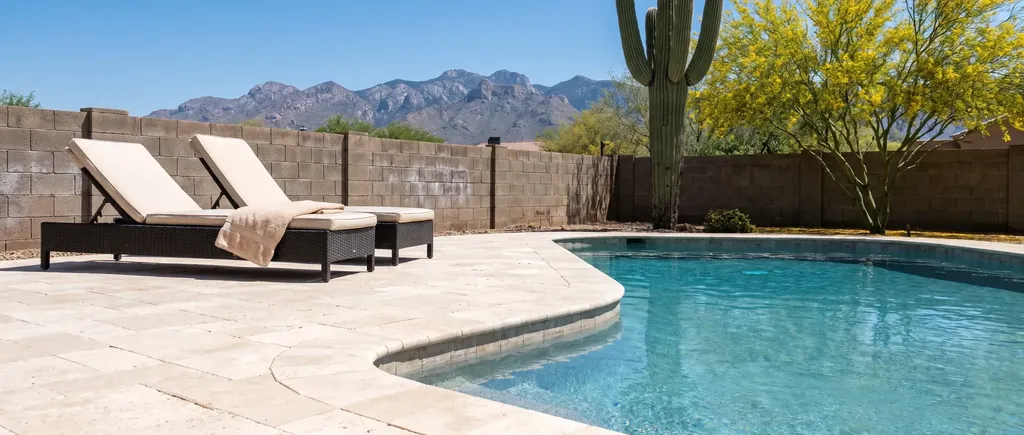
Pool decks in pavers or travertine, chosen for heat and grip underfoot and pitched so water runs away from the pool.
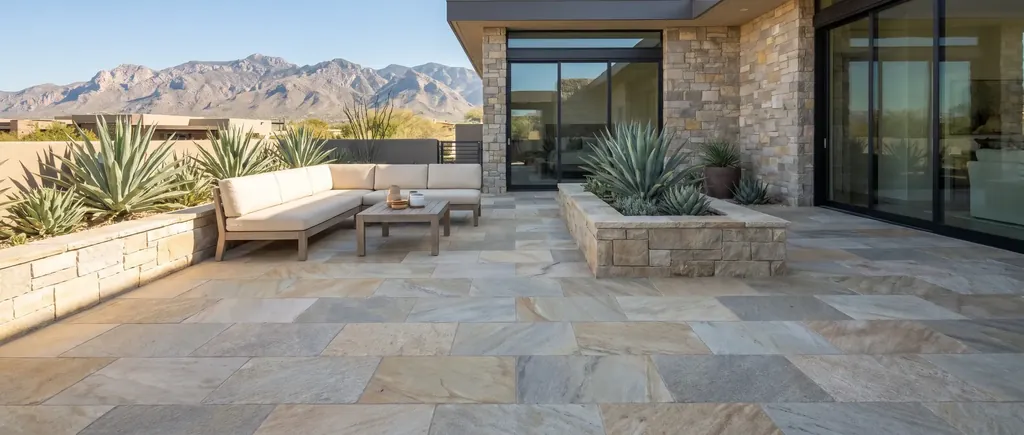
Quartzite, slate, limestone and other cut stone for patios that want the weight and texture only real stone gives.
Let us know the approximate size, whether the stone will run around a pool, and what covers the ground today. We will come out with samples and send a written estimate.
We will be in touch to set a time to visit. If it is urgent, call (520) 555-0153.