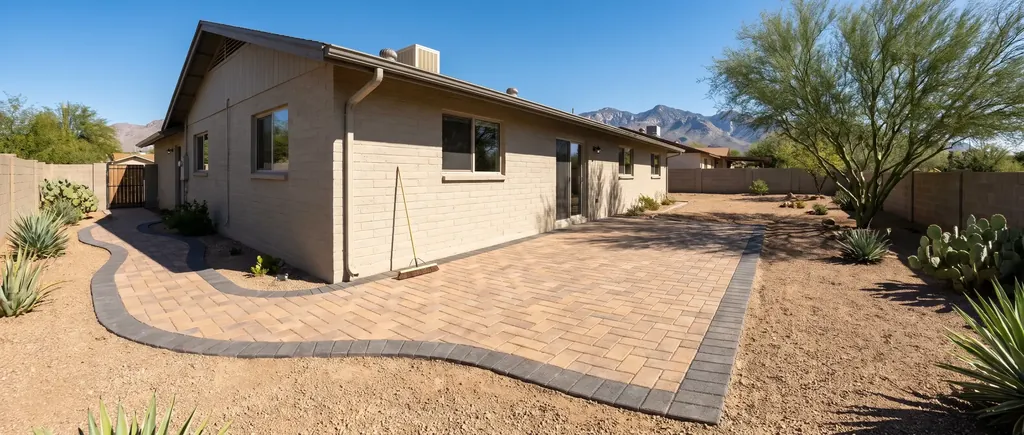
Paver installation
Interlocking paver surfaces for patios, drives, paths and pool decks, built on a base sized for the job it has to carry.
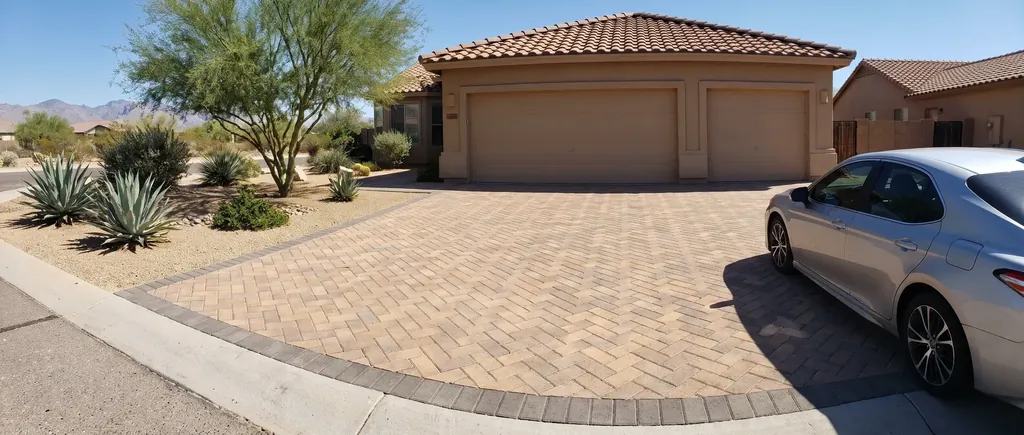
A driveway is the hardest working surface on your property. We build paver driveways from the subgrade up for the weight of real vehicles, in a pattern that stays locked when tires turn on it.
Patios hold chairs, tables and foot traffic. Driveways hold a two ton vehicle on four small contact patches, and every time the steering wheel turns while the car is barely moving, those patches twist against the surface. That twisting is what pulls a weak driveway apart.
Two things stop it. The first is the base. Under a paver driveway we excavate deeper than we would for a patio, compact the native soil, and build up crushed aggregate in thin layers, each one compacted before the next goes down. In Tucson that often means cutting through or around caliche, the hard calcium layer that sits under a lot of the valley and stops water draining where you expect it to.
The second is the pattern. Herringbone has no straight joint running the length of the drive, so each paver is held by its neighbors in two directions at once. A running bond pattern looks clean on day one, but its long joints give tires a line to push along.
Get both right and a paver driveway gives you something poured concrete never can: when a utility trench, a tree root or a settled corner needs attention, the pavers come up, the base underneath gets fixed, and the same pavers are reset with no patch to see.
Tearing out a cracked or heaved concrete driveway, or a tired gravel one, and building a full paver drive in its place. Common on older midtown and eastside homes where the original slab has split across its width.
An extra parking space beside the garage, a turnaround on a longer lot, or a pad for a trailer. New width gets the same base as the main run, because a tire cannot tell where the old drive ends.
Motor courts and circular drives at the front of the house, often with a border or inlay that ties into the front walkway so the entry reads as one design.
Breaking out the existing surface and removing it from the property, with the spoil hauled off rather than buried on site.
Digging to a depth set by the soil and the loads, compacting the subgrade, then placing and compacting aggregate base in lifts until it is firm enough to drive on before a single paver is laid.
Herringbone through the driving area, a soldier course along both edges, and every edge cut made with a wet saw so the border lines stay clean.
Heavy restraint fixed along both sides, joint sand swept in, and the whole field compacted with a protective pad so the sand works down into the joints and the pavers seat.
We look at the slope from the garage to the street, where storm water crosses the front of the lot, and what parks there day to day.
We walk through paver size, color, pattern and border options with you, and tie the drive into your walkway or entry if it makes sense.
A clear written scope listing removal, base depth, paver type and edge detail, so you can compare it line by line with other bids.
We call in utility locates before any digging. Where an HOA or the city needs to review the work at the street edge, we prepare what they ask for.
Removal, excavation, base, screed, lay, cut, restrain, sand and compact. We plan the order of work so you keep as much access as possible.
We walk the finished drive with you, explain what to expect in the first few weeks as the joint sand settles, and leave extra sand for topping up.
We build driveways as driveways. The base depth, paver thickness, pattern and edge restraint are all chosen for vehicles from the first sketch, not carried over from patio work.
We tell you the base depth in writing. When you compare driveway bids, ask every contractor how deep they will excavate and how thick the compacted base will be. Most of the difference between a cheap driveway and a lasting one sits in that answer.
And we pay attention to the front edge. The transition at the garage and the street is the most visible part of the job and the least forgiving, so we set those levels before anything else.
Tell us what is there now and what you park on it, and we will come out to check the levels and talk through options.
Herringbone, laid at 45 or 90 degrees to the direction of travel. With no continuous joint line, every paver is locked by the pavers around it, so the surface resists the twisting and braking forces that make other patterns creep and rut.
Interlocking concrete pavers that are thicker than standard patio pavers and rated for vehicle traffic. Clay brick can work on a lightly used drive, and some travertine is made in driveway thickness, but for a busy household drive concrete pavers are the safest choice.
All concrete, clay and stone pavers handle Tucson heat without damage. What changes is how hot they feel. Lighter colors and natural stone such as travertine stay noticeably cooler underfoot than dark charcoal or red, which matters on a drive the family crosses barefoot to reach the pool gate.
Poured concrete usually costs less to install. Pavers cost more up front but can be repaired invisibly, while a concrete crack stays a crack. We are happy to price both approaches during the estimate so you can weigh them on your own driveway.
Joints can grow weeds or lose sand if they are not maintained, and a paver drive built on a thin base will rut. Both problems come from installation and upkeep rather than the pavers themselves, which is why base depth and edge restraint matter so much.
It depends on what has to come out first, how deep the base needs to go for your soil and vehicles, the paver you choose, and how much cutting the shape needs. A 20 by 20 drive with an old slab to remove is a very different job from one on bare ground. We give a written estimate after seeing the site.
We build paver driveways across Tucson and the surrounding communities, including Oro Valley, Marana, Catalina Foothills, Casas Adobes, Vail, Sahuarita, Green Valley, Rita Ranch and Tanque Verde.
Interlocking paver surfaces for patios, drives, paths and pool decks, built on a base sized for the job it has to carry.
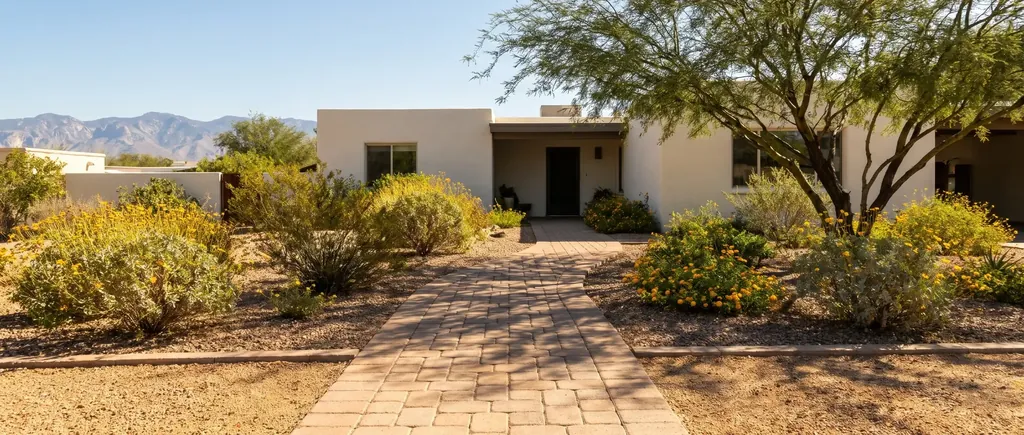
Front entries, side yard runs and garden paths with straight edges that stay straight against gravel and planting.
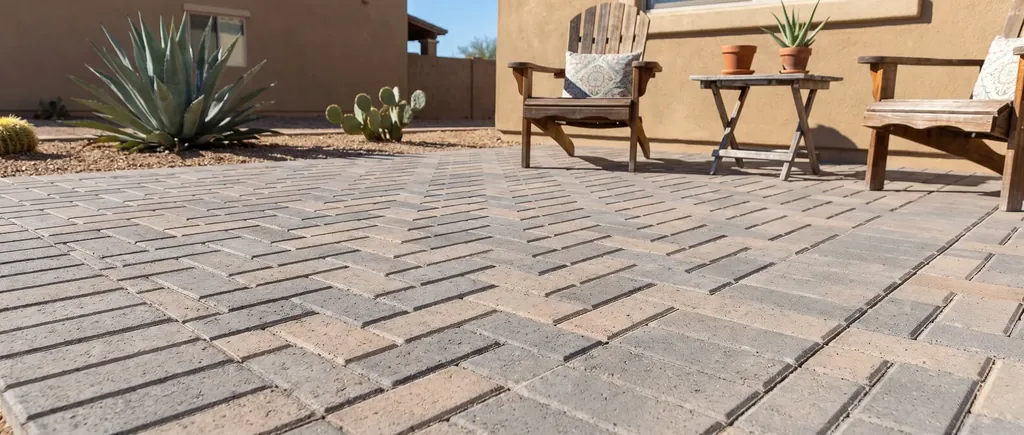
Manufactured interlocking pavers in the widest range of shapes and colors, and the strongest choice for driveways.
Tell us roughly how big the driveway is, what is on it now, and what you park there. We will come out, check the levels and send a written estimate.
We will be in touch to set a time to visit. If it is urgent, call (520) 555-0153.