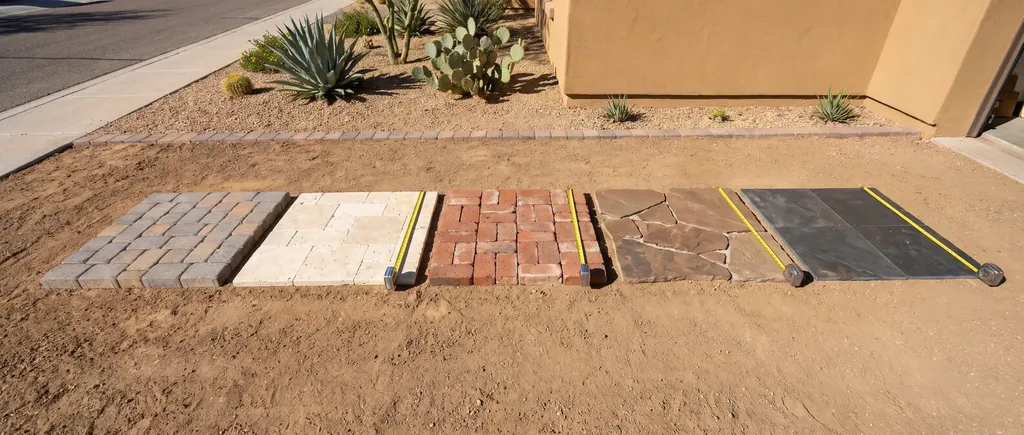
Paver types and materials
Concrete, travertine, brick, flagstone and other natural stone compared on heat, wear, upkeep and where each one belongs.
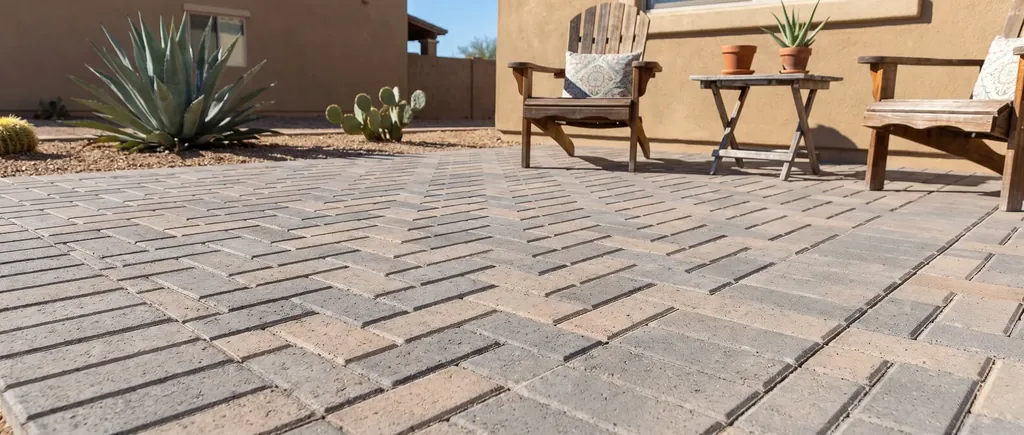
Concrete pavers are the workhorse of outdoor paving: dense, precise, made in almost any shape and color, and strong enough to park on. We install interlocking concrete pavers for patios, driveways and walkways on a base built for the load each one carries.
Both start as concrete, and that is where the similarity ends. A poured slab is one large piece. As the ground under it shifts with heat, irrigation and the occasional monsoon soaking, it has nowhere to go but to crack, and in older Tucson yards most slabs have done exactly that.
A concrete paver surface is thousands of small, dense units made in a factory under pressure and vibration. They sit on a compacted aggregate base and a thin sand bed, held tight by edge restraint and by sand in the joints. When the ground moves slightly, the joints take it. When something does go wrong, a sunken corner or a trench for a new irrigation line, we lift the pavers, correct the base and put the same units back.
Interlocking is the other half of the story. Shaped and patterned correctly, each paver bears against its neighbors, so a load on one spreads across many. That is why concrete pavers are the strongest choice we offer for driveways, and why a herringbone concrete paver drive will outlast a thin slab under daily traffic.
The tradeoff is upfront effort. Pavers take longer to install than pouring a slab, and the joints need a little care. For most homeowners the repairability and the range of looks make that worthwhile, but we are glad to talk through both options on your property.
Patios off the back of the house in a single format or a blend of sizes, with borders, curves and steps worked into the layout. Lighter tones keep the surface cooler in summer.
Thicker, vehicle rated pavers laid in herringbone over a deeper base, for full driveways, extensions and parking pads.
Front walks, side yard runs and garden paths with a soldier course border that keeps the edge straight against gravel.
Help choosing shape, size, color and finish, and a pattern suited to the use, from herringbone on drives to running bond or random blends on patios.
Old surface removed, ground excavated to the depth the load requires, subgrade compacted and aggregate placed and compacted in layers.
A screeded sand bed, pavers laid to string lines, and clean wet saw cuts at borders, walls and curves.
Edge restraint fixed on open sides, joint sand swept in, and the surface compacted so the units lock together.
We measure the area, check how water drains off it and talk about how you plan to use it.
We show you paver options in person and recommend a thickness and pattern for the load.
A written scope listing removal, base depth, paver, pattern and edging so you can compare bids fairly.
We call in utility locates and set a start date that works around your household.
Removal, excavation, base, bedding, laying, cutting, restraint, sand and compaction, with the site cleaned at the end of each day.
We walk the finished surface with you, explain how the joint sand settles and leave spare pavers for future repairs.
We size the job to the load. A patio paver and a driveway paver are not interchangeable, and neither is the base under them, so we specify both in writing.
We give a fair comparison. If a poured slab suits a utility area better, we will say so, and we will explain where pavers earn their extra cost.
And we keep your spares. Leftover pavers from the same run go into your garage, so a future repair matches the color already on the ground.
Tell us what you have now and what you want the space to do. We will come out, look at the ground and walk you through both options.
Usually not to install. A poured slab is quicker to place, so it normally costs less on day one. Interlocking pavers cost more up front but repair without patches and avoid replacing the whole surface when one area fails.
A well built paver surface generally outlasts a poured slab, because individual units can be lifted and reset instead of the whole slab cracking and being replaced. Both depend on the base beneath them.
For poured concrete or concrete pavers, the main factors are removal of what is there now, excavation and base depth, the product chosen, the pattern and amount of cutting, and how easily equipment reaches the yard. We price your patio after an on-site visit.
Large format units vary with the maker, thickness and finish, and they need a flatter base and more careful handling than standard sizes. We price the installed surface rather than individual units, and we can show you large format options during the estimate.
Usually, yes. Standard concrete pavers in common shapes and stock colors are the most economical, which is part of why they are so widely used. Natural stone such as travertine and flagstone generally costs more.
Skip it on permeable paver systems, on joints too narrow or too wide for the product, and whenever rain is due before it can cure. Applied badly it can leave a haze on the paver face, so we follow the maker's instructions closely.
We install concrete pavers across Tucson and the surrounding communities, including Oro Valley, Marana, Catalina Foothills, Casas Adobes, Vail, Sahuarita, Green Valley, Rita Ranch and Tanque Verde.
Concrete, travertine, brick, flagstone and other natural stone compared on heat, wear, upkeep and where each one belongs.
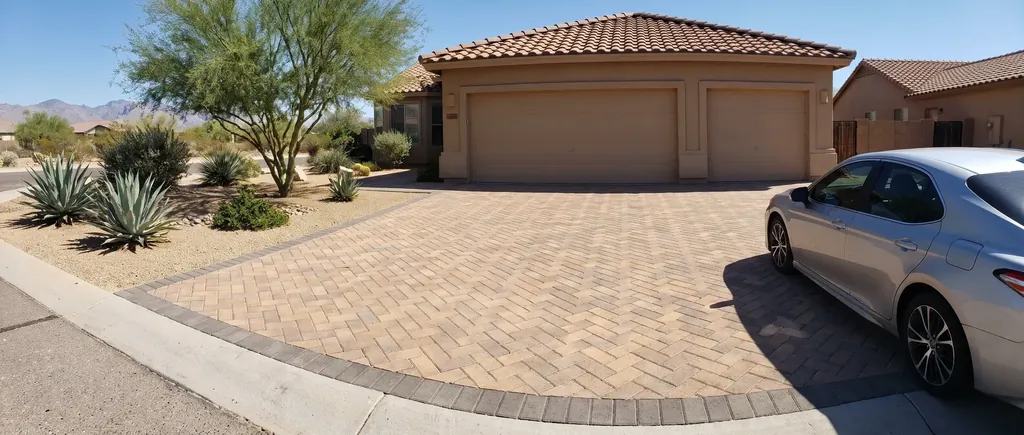
Driveways built to a vehicle load base, laid in a pattern that locks under turning tires and lifts out cleanly for repairs.
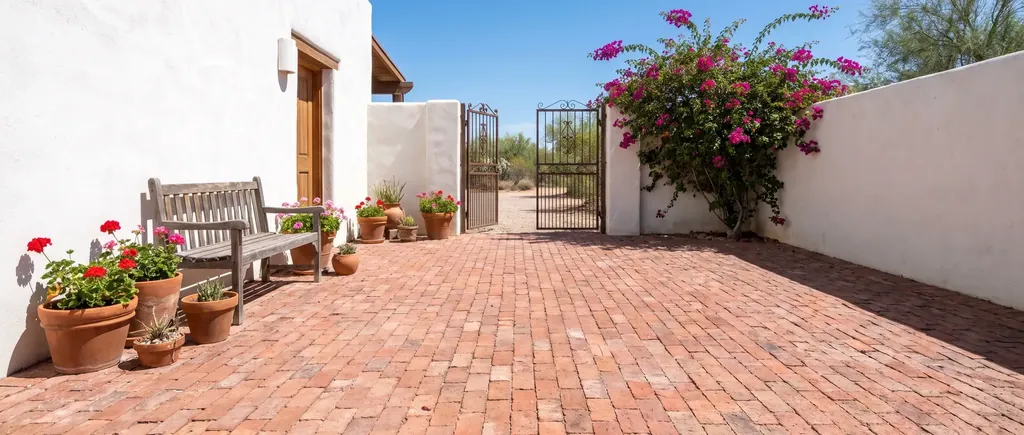
Fired clay brick for entries, courtyards and borders, with color that runs through the unit instead of sitting on top.
Tell us roughly how big the area is, what it will be used for and what is on it now. We will come out, check the ground and send a written estimate.
We will be in touch to set a time to visit. If it is urgent, call (520) 555-0153.