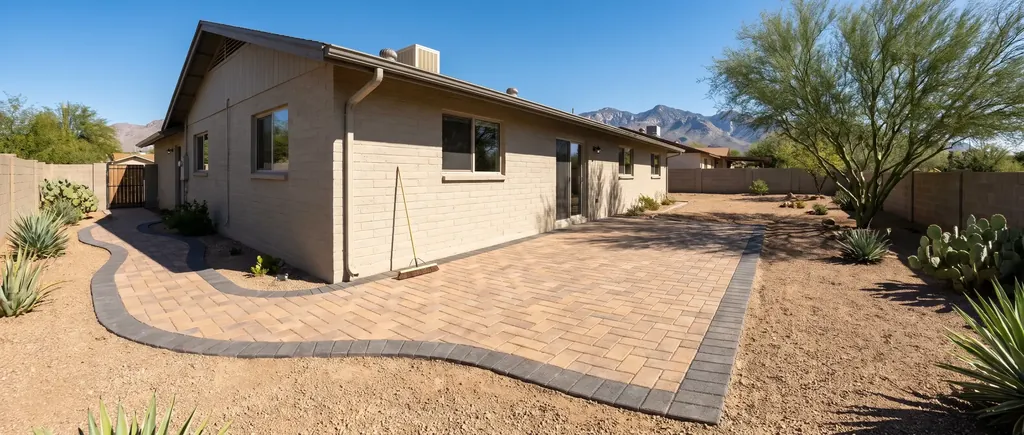
Paver installation
Interlocking paver surfaces for patios, drives, paths and pool decks, built on a base sized for the job it has to carry.
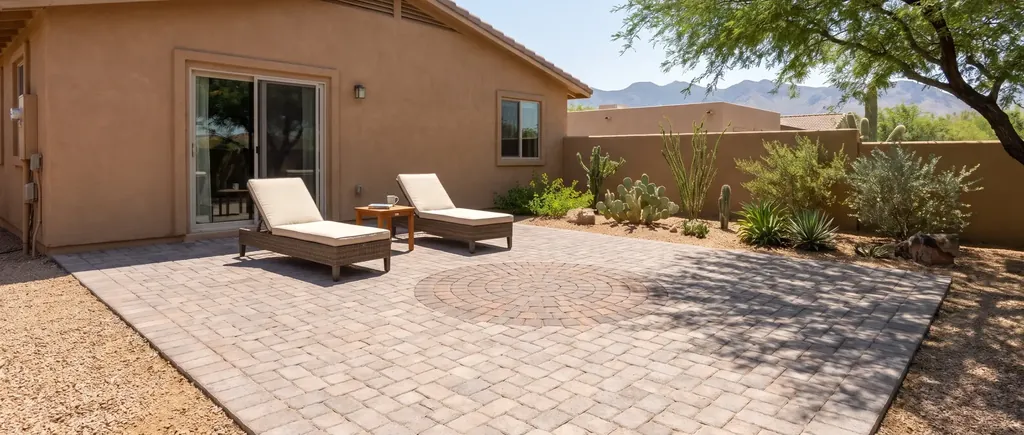
We build interlocking paver patios off the back of Tucson homes, from the first string line to the last swept joint. Every one sits on a compacted stone base, is held by a fixed edge, and falls gently away from your house so monsoon water has somewhere to go.
Most paver patios that fail in Tucson fail from underneath. The pavers themselves are tough, and good concrete units shrug off sun, cold nights and foot traffic. What gives out is the ground below them. A thin layer of sand over loose fill settles unevenly, joints open, and low spots hold a puddle every time the summer storms roll through.
As paver patio builders, we spend most of our effort on the part you never see. We dig out the topsoil and any organic material, compact what is left, and build up a base of crushed aggregate in layers, running a plate compactor over each one. In much of the valley we hit caliche, the cemented layer that sits a few inches to a few feet down. It is hard to dig, but more importantly it stops water draining, so we plan the base and the fall around it rather than pretending it is not there.
Then comes the slope. A patio should never be dead flat. We set a steady fall away from the foundation, usually toward a planting bed, gravel strip or yard drain, so rain leaves the surface instead of soaking toward your slab.
Only after that do the pavers go down. Because every unit is separate, a paver patio flexes slightly with the ground instead of cracking across like a poured slab, and if a section ever needs attention it lifts out and goes back with nothing to patch.
For new build homes handed over with graded dirt, or older lots where the back yard never got finished. We lay out the patio around your doors, the path of the afternoon sun and how you actually plan to use the space, then build from the subgrade up.
Breaking out a heaved or split concrete patio and building a paver patio in its place, often a little larger than the original and with a fall that finally sends water the right way.
Adding width to an existing paver patio, tying a new area into the old one, or setting a border, circle or contrasting band so the surface reads as designed rather than dropped in.
Marking the patio outline on the ground, checking levels at the house, and setting the direction and amount of fall before anything is dug.
Removing soil to the depth the ground calls for, compacting the subgrade, then placing aggregate base in compacted lifts and screeding a level bedding layer on top.
Setting pavers in the pattern you choose, with borders and cuts made on a wet saw so every edge and corner finishes clean against the house and the yard.
Fixing a restraint along every open edge, sweeping sand into the joints, and compacting the whole surface with a pad so the pavers bed in and the sand locks them together.
We look at the yard, the doors you will use, where water runs during a storm and what is in the ground already, from old slabs to sprinkler lines.
We sketch the patio shape and size with you, then go through paver styles, colors, sizes and patterns that suit the house and the heat.
A plain written scope showing removal, base depth, paver choice, edging and cleanup, laid out so you can compare it with other paver patio contractors line by line.
We call in utility locates before digging and confirm any HOA approval you need, then book a start date and talk through gate and side yard access.
Removal, excavation, base, bedding, laying, cutting, restraint, sand and compaction, in that order, with the work area kept tidy at the end of each day.
We walk the finished patio with you, show you how the fall works, and explain how the joint sand settles over the first few weeks.
We are paver patio installers who treat the base as the job. When you compare bids, ask each contractor how deep they will dig and how many compacted layers of base they will place. We put that answer in writing.
We set the drainage before the design. A beautiful pattern on a patio that holds water is still a problem, so the fall is decided first and the paver layout follows it.
And we stay with paver work. We build the ground you walk on and leave the structures above it to others, which means the people who plan your patio are the same crew who lay it.
Tell us what the back yard looks like today and how you want to use it, and we will come out to measure and check the levels.
The ones we see most are a patio built too small for the table and chairs, a surface set too high at the back door, and a patio laid dead flat so water sits on it. Choosing a dark paver for a spot in full afternoon sun is another, and so is leaving the open sides without a restraint where they meet gravel or planting.
For most Tucson back yards, yes. Interlocking concrete pavers are strong, come in a wide range of shapes and colors, and flex slightly with the ground instead of cracking across like a poured slab. If an area ever needs attention, it lifts out and goes back with nothing to patch. We bring samples to the estimate so you can compare colors in your own light.
A compacted subgrade, then a crushed aggregate base placed and compacted in layers, then a thin, level bedding layer of coarse sand. Some sites also get a geotextile fabric between the soil and the base to keep the two from mixing.
No. The base is compacted hard, but the bedding sand is screeded smooth and left loose. The pavers are laid on it and then the whole surface is compacted, which presses the pavers into the sand and drives sand up into the joints.
For a tiny landing it can be, but not for a full patio. A hand tamper cannot reach the density a plate compactor gives across a whole base, and that difference shows up later as soft spots and sinking. We compact every base and every finished surface with a plate compactor.
It depends on what has to be removed first, how deep the base needs to go on your soil, the paver you pick, the pattern and how much cutting the shape needs, and how easy it is to get equipment into the yard. A 20 by 20 patio on open dirt is a very different job from one replacing an old slab behind a narrow gate. We give a written estimate after a free site visit.
We build paver patios across Tucson and the surrounding communities, including Oro Valley, Marana, Catalina Foothills, Casas Adobes, Vail, Sahuarita, Green Valley, Rita Ranch and Tanque Verde.
Interlocking paver surfaces for patios, drives, paths and pool decks, built on a base sized for the job it has to carry.
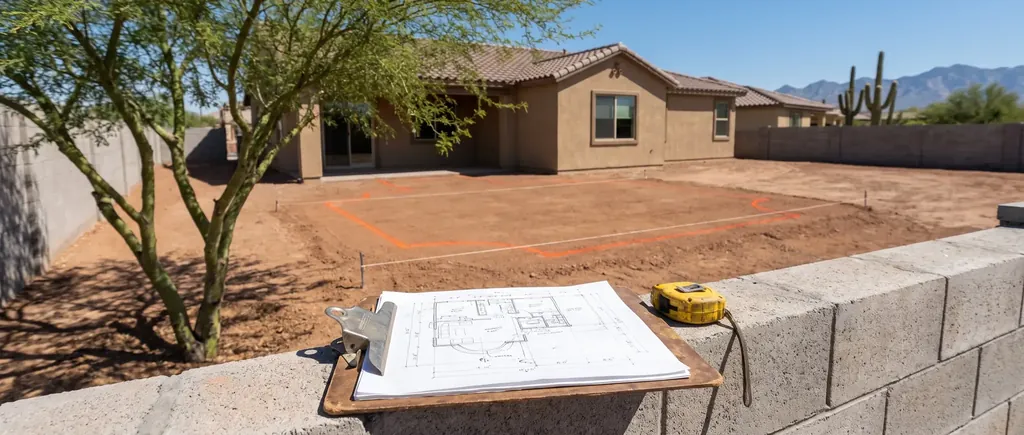
A layout drawn around sun, shade, doors and furniture before anything is excavated, then built by the same crew.
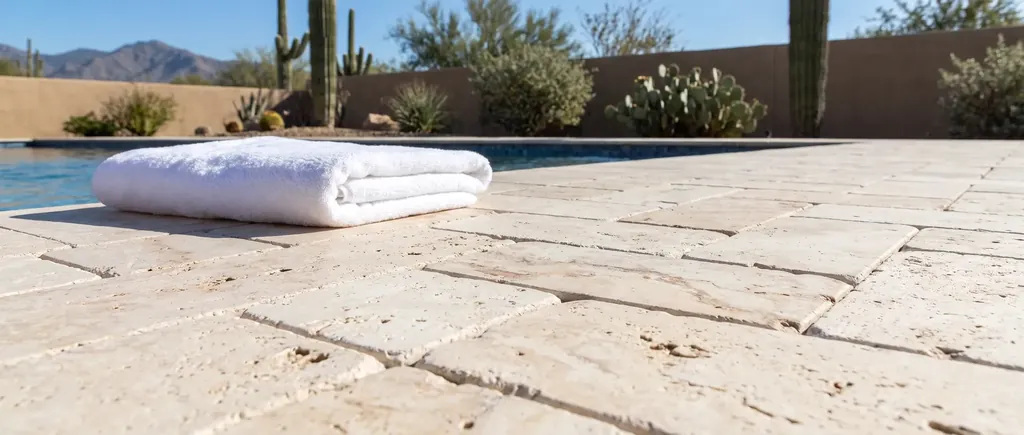
Natural travertine for patios and pool decks, prized for staying cooler underfoot than most paving in the same color.
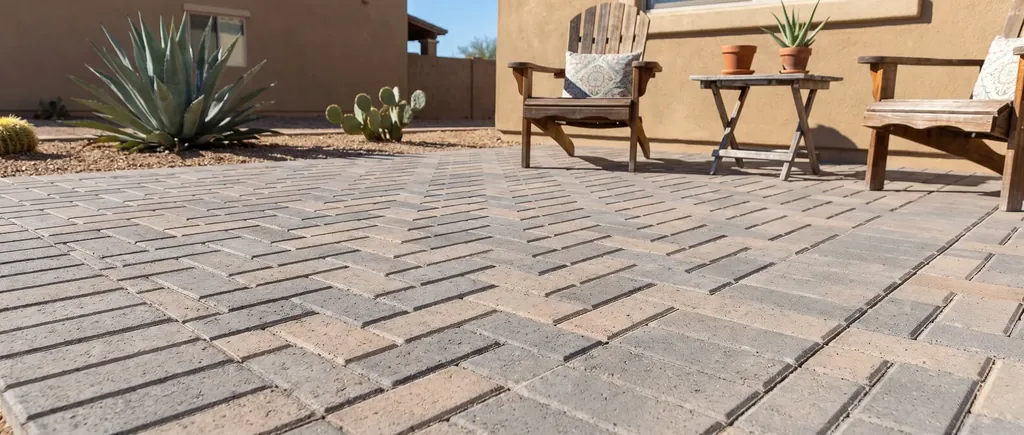
Manufactured interlocking pavers in the widest range of shapes and colors, and the strongest choice for driveways.
Tell us roughly how big you want the patio, what is there now, and how you plan to use it. We will come out, check the levels and send a written estimate.
We will be in touch to set a time to visit. If it is urgent, call (520) 555-0153.